
☕ The Dark Side of the Weave: Why Your Carbon Fiber Mug Might Be Toxic
In the automotive world, carbon fiber is "black gold." We love it for the weight savings on the track and the exotic texture it adds to a cockpit. Naturally, that obsession has bled into our lifestyle—leading to a flood of carbon fiber mugs, ashtrays, and daily accessories.
Recently we decided to make a carbon layered mug, we have noticed some other providers. But there is a silent problem in the "lifestyle" composite market that most mass-production factories won't tell you: Carbon fiber isn't meant to be ingested. I’ve seen the "behind the scenes" of how these parts are made. If you’re drinking out of a cheap carbon mug, you might be getting more than just a caffeine kick.
1. The Resin Trap: Hidden Chemicals
Carbon fiber is essentially a fabric. It only becomes a hard, shiny "part" when it is soaked in a polymer resin—usually epoxy.
In the race to make $20 carbon accessories, many overseas factories use industrial-grade resins that are absolutely not food-safe. When you pour boiling coffee into a raw carbon vessel, the heat can trigger off-gassing or leaching. These resins often contain Bisphenol A (BPA) and other volatile organic compounds (VOCs) that are linked to serious long-term health risks, including carcinogenicity.
The Rule: If a mug is 100% raw carbon on the inside with no food-grade liner, do not drink from it. The aesthetic isn't worth the risk.
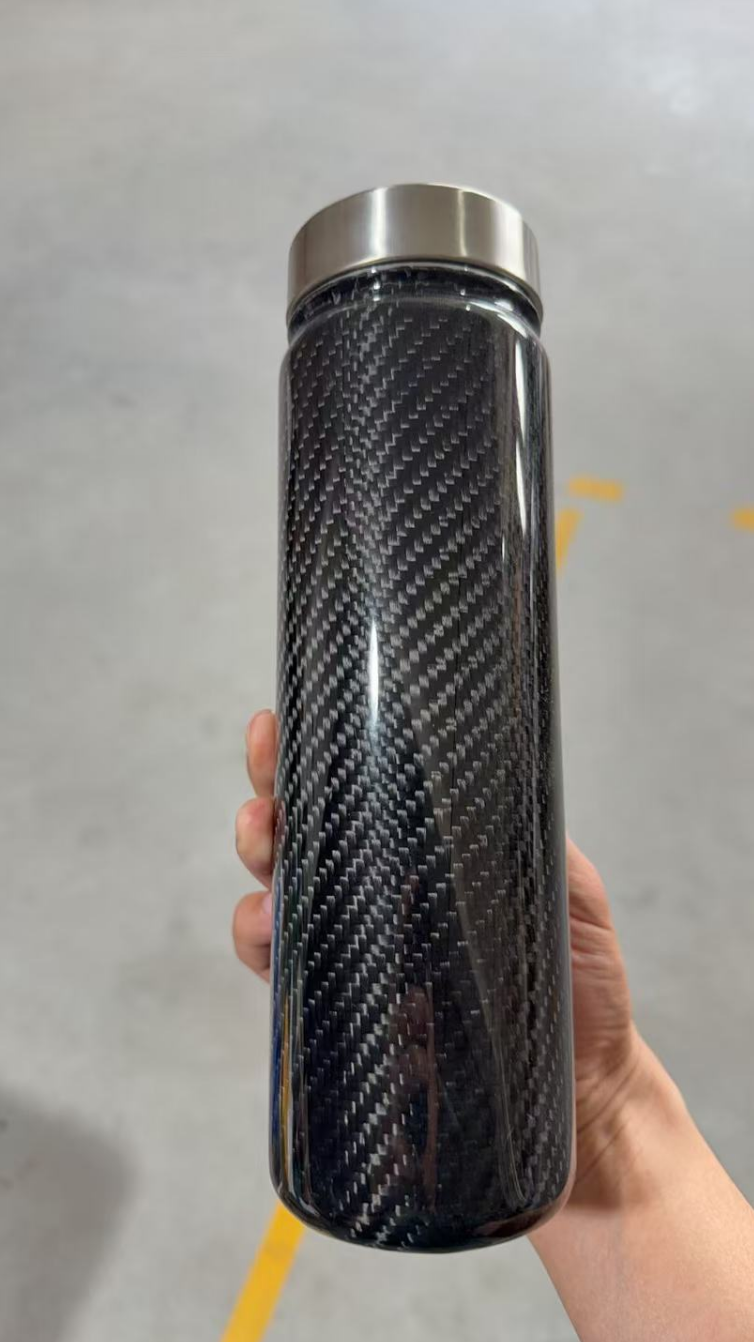
2. Why "Pre-Preg" Matters (Even for a Mug)
There are two ways to make carbon look good: the "cheap way" and the "right way."
Wet Lay-up: This is what you see in most budget accessories. Resin is brushed on by hand. It’s inconsistent, it smells, and it’s prone to "yellowing" over time.
Pre-Preg (Dry Carbon): This is aerospace-grade. The resin is infused into the fabric by a machine in a controlled environment, then "baked" in an oven or autoclave.
3. The Ashtray Warning
The same danger exists for carbon fiber ashtrays. Carbon fiber handles heat well, but the resins holding it together often don't. A lit cigar sitting on a cheap carbon ashtray can reach temperatures that cause the resin to break down and release acrid, toxic smoke. You aren't just smelling your cigar; you’re breathing in burning epoxy.
Expert Note: According to safety studies on epoxy resin systems, uncured or industrial-grade resins are known sensitizers and can cause long-term health issues if they aren't properly stabilized for human contact.
It’s okay if some enthusiasts start with budget "carbon-look" plastic. We all start somewhere. But as you grow, you realize that true luxury isn't just about the pattern; it’s about the science behind it. For those who want something truly unique, we offer Tailor-Made services to create bespoke pieces that look incredible and, more importantly, are built right.